Key takeaways
- For a home or travel set-up with a budget of under $150, the GL.iNet Beryl AX (GL-MT3000) suits most people who want a router that runs a VPN client for…
For a home or travel set-up with a budget of under $150, the GL.iNet Beryl AX (GL-MT3000) suits most people who want a router that runs a VPN client for the whole network, the Flint (GL-AX1800) suits households that want a stronger Wi-Fi 6 main router with VPN support, and the pocket-sized Opal (GL-SFT1200) suits travellers who only need a slow, small VPN hop. GL.iNet builds VPN client and server features directly into its firmware and offers several compact models in this price tier. This guide sets out the stated speeds and the limits you should know about.
Our top picks


As an Amazon Associate we earn from qualifying purchases at no extra cost to you.
At a glance
| Model | Best for | Key stated specs | Limits |
|---|---|---|---|
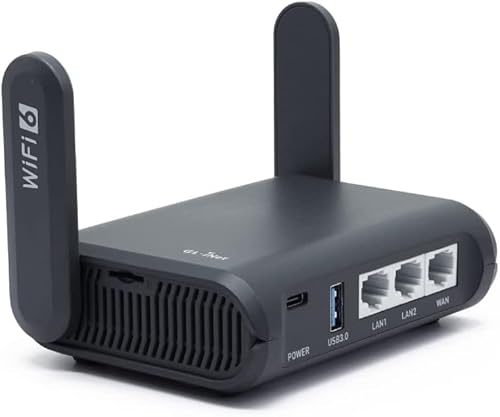
| GL.iNet Beryl AX (GL-MT3000) | Travel and small-home VPN with 2.5G WAN | Wi-Fi 6 AX3000 (574 Mbps on 2.4 GHz, 2402 Mbps on 5 GHz); MediaTek MT7981B 1.3 GHz dual-core; 2.5G WAN, 1G LAN; USB 3.0; OpenVPN up to 150 Mbps, WireGuard up to 300 Mbps (maker lab figures); about 118 by 85 by 30 mm | One LAN port; VPN speeds are lab figures; a newer successor, the Beryl 7, exists |
| GL.iNet Flint (GL-AX1800) | Main home router with VPN | Dual-band Wi-Fi 6 at 600 Mbps plus 1200 Mbps; OpenVPN and WireGuard client and server; VPN encryption up to 667 Mbps per the maker; MU-MIMO; up to 120 devices | Retail and manual listings show up to 112 Mbps OpenVPN and 500 Mbps WireGuard, so figures differ by source |
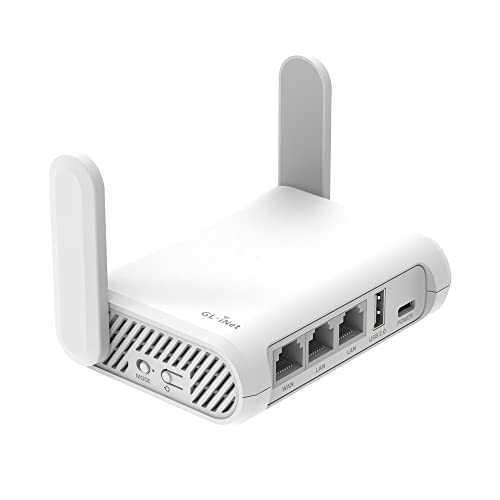
| GL.iNet Opal (GL-SFT1200) | Compact travel use | Wi-Fi 5 at 300 Mbps plus 867 Mbps; 1 GHz dual-core, 128 MB memory; WireGuard up to 65 Mbps, OpenVPN up to 12 Mbps; 145 g; side switch can toggle the VPN client | Slow VPN throughput; Wi-Fi 5 |
| GL.iNet Beryl 7 | Faster VPN on a newer platform | Wi-Fi 7; quad-core 2.0 GHz; two 2.5G ports; WireGuard up to 1,100 Mbps and OpenVPN with DCO up to 1,000 Mbps per the maker | Direct successor to the Beryl AX; maker lab figures; tier may sit near the cap |
The routers in detail
GL.iNet Beryl AX (GL-MT3000)
The maker’s pages list an AX3000 Wi-Fi 6 design with 574 Mbps on 2.4 GHz and 2402 Mbps on 5 GHz, a MediaTek MT7981B 1.3 GHz dual-core processor, a 2.5G WAN port, a 1G LAN port, a USB 3.0 port and USB-C power input. Size is about 118 by 85 by 30 mm, with retractable antennas. GL.iNet rates OpenVPN at up to 150 Mbps and WireGuard at up to 300 Mbps, and says these are lab figures with the router acting as a VPN client over a local network. Real speeds depend on your connection and the VPN server, and speeds are slower when the router acts as a VPN server. The firmware is OpenWrt-based, with a GL.iNet interface that handles VPN cascading, policy routing and more than 30 VPN service providers. The single LAN port means you will need a switch for several wired devices.
GL.iNet Flint (GL-AX1800)
The Flint is a dual-band Wi-Fi 6 router listing 600 Mbps on 2.4 GHz and 1200 Mbps on 5 GHz, with multi-user MIMO and support for up to 120 devices. It supports OpenVPN and WireGuard clients and can host VPN servers. GL.iNet’s product page states a VPN encryption speed up to 667 Mbps, while retail and manual listings give up to 112 Mbps for standard OpenVPN and 500 Mbps for WireGuard, and the maker offers an OpenVPN DCO option that raises OpenVPN speed. Forum users report widely varying results depending on the provider, server distance and enabled features, so treat every figure as a ceiling. It has more VPN headroom than the Opal and suits an everyday main router.
GL.iNet Opal (GL-SFT1200)
Listed as a pocket-sized travel router with 1200 Mbps of combined Wi-Fi 5 speed (300 Mbps on 2.4 GHz, 867 Mbps on 5 GHz), a 1 GHz dual-core processor, 128 MB of DDR3 memory and 128 MB of flash. It weighs 145 g and measures 118 by 85 by 30 mm. The maker lists WireGuard up to 65 Mbps and OpenVPN up to 12 Mbps, so it suits hotel Wi-Fi and light browsing more than fast fibre. A configurable side switch toggles the VPN client.
GL.iNet Beryl 7
The Beryl 7 (GL-MT3600BE) is described as the direct successor to the Beryl AX, with Wi-Fi 7, a faster quad-core processor, two 2.5G ports, and maker-rated speeds of up to 1,100 Mbps for WireGuard and up to 1,000 Mbps for OpenVPN with DCO. These are lab figures with the router acting as a client over a local network. Because it replaces the Beryl AX, it is worth comparing the two on the maker’s pages before choosing.
What to check before you buy
VPN speed versus internet speed
A router running a VPN client encrypts all traffic, and its processor sets the ceiling. If your internet plan is faster than the maker’s stated VPN throughput, the VPN tunnel becomes the bottleneck. A 300 Mbps WireGuard rating suits plans in that range, and a 65 Mbps rating, as on the Opal, suits slower connections.
Protocol and provider support
WireGuard is usually faster than OpenVPN on the same hardware, as the maker’s own figures show. Check that your VPN provider offers config files for the protocol you want, since not every provider supports both on a router.
Client versus server
A VPN client router sends your traffic through a provider. A VPN server lets you connect back to your home network from outside. The listed routers support both, though server speeds are lower, as the Beryl AX notes.
Wi-Fi standard and ports
Wi-Fi 6 on the Beryl AX and Flint helps with many devices and has better efficiency than Wi-Fi 5 on the Opal. The Beryl AX adds a 2.5G WAN port, which matters only if your internet plan exceeds 1 Gbps.
Security and updates
Change the default admin password, apply firmware updates and disable remote administration you do not use. A VPN client on the router encrypts traffic between the router and the VPN server, as the makers describe it, but no router can guarantee privacy or security, and it does not replace sensible account security. Follow the maker’s manual and the laws that apply to VPN use where you live.
Pick X if you…
| Pick this | If you… |
|---|---|
| Beryl AX | want a compact router with a stated WireGuard rating up to 300 Mbps and a 2.5G WAN port |
| Flint | want a main home router with Wi-Fi 6 coverage for many devices |
| Opal | only need a small travel router for hotel and cafe Wi-Fi |
| Beryl 7 | want the newer platform with Wi-Fi 7 and faster stated VPN speeds |
| A VPN app on each device | do not need the whole network covered and want the simplest set-up |
Budget tiers
The entry tier is travel routers like the Opal, with low VPN throughput. The mid-range tier includes the Beryl AX and Flint, which balance Wi-Fi 6 with respectable VPN speeds. Premium routers add Wi-Fi 7, faster processors and more ports, as with the Beryl 7. Because retail pricing moves, choose by stated VPN throughput, Wi-Fi standard and port layout.
Where a VPN router fits in a home network
A VPN router can sit as the main router, or behind your existing router as a second device that only specific gadgets connect to. The second approach is popular with the compact GL.iNet models, since a streaming box or a work laptop can join the VPN Wi-Fi network while the rest of the household stays on the normal network. Policy routing, which the Beryl AX lists, lets you send only chosen devices or destinations through the tunnel. If you place the router behind another router, you may end up with two layers of network address translation, which can complicate some games and remote-access tools.
When travelling, plug the router into the hotel’s wired port or join its Wi-Fi as a repeater, then connect your own devices to the router so they all share one VPN tunnel and one captive-portal login. Keep the VPN client switched on only when you need it, because the tunnel adds latency, and test a speed check after configuring it. If a service blocks your VPN server, try a different server or provider instead of altering your settings further.
Alternatives
- VPN app on devices: no router change is needed, and each device chooses its own server.
- Run your own router firmware: some mainstream routers can be flashed with OpenWrt, though this risks voiding warranties and needs technical care.
- Router with a built-in VPN client from a mainstream brand: some Wi-Fi routers include VPN features in their stock firmware, so compare the maker’s stated protocol list and speeds.
Frequently Asked Questions
What is the best VPN router under $150?
The GL.iNet Beryl AX and its newer successor, the Beryl 7, are the closest all-round matches among those confirmed here; the Beryl AX has a stated WireGuard rating up to 300 Mbps and a 2.5G WAN port, and the Beryl 7 lists much higher maker figures. The Flint suits a main home router, and the Opal suits slow travel use.
Will a VPN router slow my internet?
Encryption takes processing power, so speed is limited by the router’s VPN throughput and by the VPN server. The maker’s figures are lab results and real speeds are usually lower.
Is WireGuard better than OpenVPN?
On these routers the maker lists higher WireGuard speeds than OpenVPN, for example 300 versus 150 Mbps on the Beryl AX. Your provider must support WireGuard to use it.
Can I use a VPN router with any VPN service?
GL.iNet lists support for more than 30 providers on the Beryl AX, and you can load your own configuration files. Check that your provider offers router configs.
Does a VPN router hide everything I do online?
No. The maker describes the VPN client as encrypting traffic between your router and the VPN server, but accounts, cookies and browser fingerprints still identify you. Do not treat any router as a guarantee of privacy or security, and follow the maker’s guidance.
Can the router also act as a VPN server for remote access?
Yes, the listed models support server mode, though throughput is lower than in client mode. Follow the maker’s setup guide and keep firmware updated.