Key takeaways
- For a home router, modem, desktop PC or small NAS on a budget of under $150, the APC Back-UPS BE600M1 suits a compact set-up with a few devices, the…
For a home router, modem, desktop PC or small NAS on a budget of under $150, the APC Back-UPS BE600M1 suits a compact set-up with a few devices, the CyberPower CP685AVRLCD suits buyers who want automatic voltage regulation and an LCD status panel, and the CyberPower CP1000AVRLCD suits people who need more capacity and outlets but may have to stretch the budget. A small UPS is meant to carry a device through a short outage or give it time to shut down cleanly, not to run a desk for hours. This guide sets out the stated specs, the runtime limits and how to size one.
Our top picks



As an Amazon Associate we earn from qualifying purchases at no extra cost to you.
At a glance
| Model | Best for | Key stated specs | Limits |
|---|---|---|---|
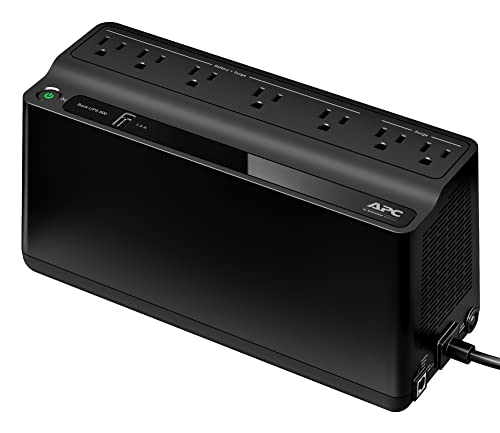
| APC Back-UPS BE600M1 | Router, modem and a small PC or console | 600 VA / 330 W; 7 outlets (5 battery plus surge, 2 surge only); 1 USB charging port; 490 joules; standby design; about 7.69 lb; 3-year warranty | Simulated sine wave; standby design with no stated voltage regulation; see the maker’s runtime chart for your load |
| CyberPower CP685AVRLCD | Desktop PC, monitor and network gear with status display | 685 VA / 390 W; 8 outlets (4 battery plus surge, 4 surge only); line-interactive with AVR; LCD; 12 V 7 Ah battery; 2 min full load, 11 min half load | Simulated sine wave; runtime figures are approximate and depend on load and battery age |
| CyberPower CP1000AVRLCD | Heavier loads and more devices | 1000 VA / 600 W; 9 outlets (5 battery plus surge, 4 surge only); 12 V 9 Ah battery; 2 min full load, 9 min half load; 3-year warranty; Ethernet and coax protection | Generally lists above the cap; simulated sine wave |
The models in detail
APC Back-UPS BE600M1
Retail listings describe a 600 VA, 330 W unit with seven NEMA 5-15R outlets: five with battery backup and surge protection and two surge-only. One listing reverses that split and states 360 W, which looks like an error, so go with the majority. It has a single USB Type-A charging port rated 1.5 A, a 490 joule surge rating, a standby topology with a 6 to 10 ms transfer time and a simulated sine wave output. APC publishes runtime charts for specific loads, and this guide does not quote runtime for it, since the result depends on what is plugged in and on battery age. It weighs about 7.69 lb, recharges in around 10 hours and carries a 3-year warranty. Its datasheet describes a standby design with a 92 to 139 V input range and makes no automatic voltage regulation claim, although a few retail listings mention one, so do not rely on that feature without the manual’s confirmation. The light weight and wall-friendly size suit a shelf or desk.
CyberPower CP685AVRLCD
CyberPower’s own page lists a line-interactive design with a simulated sine wave, 685 VA and 390 W, a 120 VAC input, a 6 foot cord, eight outlets (four battery plus surge, four surge only) and USB communication with PowerPanel Personal software. The battery is a 12 V, 7 Ah sealed lead-acid type described as hot-swappable. CyberPower’s spec table lists 2 minutes at full load and 11 minutes at half load; these are approximate figures for a new battery, and other pages show slightly different numbers, so treat them as indicative only. The LCD shows load and battery status, and the AVR feature corrects minor voltage dips and rises without drawing on the battery. For people with brownout-prone mains, that matters.
CyberPower CP1000AVRLCD
The larger sibling lists 1000 VA and 600 W, nine outlets (five battery plus surge, four surge only), USB and serial communication, Ethernet and coaxial data line protection, a 12 V 9 Ah battery replaced with an RB1290 cartridge, and a typical recharge time of 8 hours. The maker’s datasheet lists 2 minutes at full load and 9 minutes at half load, again approximate, and some retail answers quote shorter times, so rely on the maker’s chart for your own load. The page lists a 3-year warranty and a connected equipment guarantee. This model generally sits above the cap, so treat it as the next step up rather than a guaranteed under $150 option.
How to size a UPS
Add up the watts
Add the rated or measured wattage of each device you plan to plug into the battery outlets. Keep the total well under the unit’s watt rating, since runtime drops sharply near full load, as the makers’ short full-load figures above show. A router and modem draw little, so the makers’ runtime charts show longer times for light loads than for a gaming PC, but no runtime is guaranteed.
VA versus watts
VA is the apparent power and watts the usable power. The watt figure is the one to respect. A 600 VA unit that lists 330 W cannot be loaded to 600 W.
Battery outlets versus surge-only outlets
Only some outlets carry the battery. Plug the router, modem, PC and NAS into the battery outlets, and put speakers, chargers or a printer on surge-only outlets. Do not plug laser printers, space heaters or other high-draw appliances into battery outlets; UPS makers’ guidance generally excludes them, so follow the manual.
Simulated sine wave
All three models above output a simulated sine wave on battery. Most computer power supplies accept this, but some units with active power-factor correction can behave badly, so consult your PSU’s and UPS’s manuals if you have a high-end build. If you see unexpected shutdowns, speak to the device maker or an electrician.
Battery life and replacement
Sealed lead-acid batteries wear out, commonly after a few years. The CyberPower pages describe replacement cartridges and APC lists a replacement cartridge for the BE600M1. Follow the manual’s replacement procedure, plan for the cost in the long run, and follow the maker’s disposal instructions, since lead-acid batteries should not go in household trash.
Placement and safety
Place the UPS on a hard, ventilated surface away from heat, water and direct sun. Plug it directly into a wall outlet, not into another surge protector or an extension cord, and do not daisy-chain power strips on its outlets. Keep the manual, since some makers state exclusions for medical equipment and life-support devices. If the unit beeps, smells hot or shows swelling, unplug it and contact the maker. Fire, shock and wiring concerns in the building belong with a qualified electrician.
Pick X if you…
| Pick this | If you… |
|---|---|
| APC BE600M1 | need to protect a router, modem and a small PC with a light, wall-friendly unit |
| CyberPower CP685AVRLCD | want an LCD panel and automatic voltage regulation for a desktop set-up |
| CyberPower CP1000AVRLCD | run more devices or a heavier PC and can spend a tier higher |
| A surge protector only | do not need battery runtime and only want spike protection |
Budget tiers
Entry tier units around 600 to 700 VA, like the BE600M1 and CP685AVRLCD, are intended for networking gear and a modest PC, giving short outage cover. Mid-range units around 1000 VA add capacity, outlets and slightly more battery. Premium units add pure sine wave output, larger batteries and network management cards. Because pricing shifts, choose by watts and outlet counts rather than by any advertised figure.
Example load planning
Suppose you plan to protect a router, a modem and a desktop. Look up the wattage each device lists on its label or in its manual, add them together, and compare the sum with the UPS’s watt rating, not its VA rating. A light network-only load leaves a large margin on any of the three models above, and the makers’ runtime charts for lighter loads are the place to look for estimates. A desktop with a graphics card can approach the unit’s limit, and in that case the maker’s short full-load figure is the more realistic guide. If your total sits close to the rating, move up a size.
It also helps to decide what the UPS is for. If the aim is to save open documents and shut down cleanly, a few minutes is enough, and the USB link plus the maker’s software, such as PowerPanel Personal for the CyberPower models, can trigger an automatic shutdown. If the aim is to keep the internet running during outages, plug only the router and modem into the battery outlets so they draw the least power possible.
Alternatives
- Surge protector: protects against spikes but gives no runtime during an outage.
- Mini DC UPS for routers: small battery packs designed for low-power network gear exist, though they do not suit a desktop PC; follow the maker’s stated limits.
- Portable power station: offers larger capacity but usually a longer switch-over time, so check the maker’s stated transfer behaviour before relying on one for a computer.
Frequently Asked Questions
How long will a small UPS keep my PC running?
CyberPower’s spec tables list about 2 minutes at full load and 9 to 11 minutes at half load, and APC publishes its own runtime chart. Real runtime depends on your actual draw and battery age, and none of it is guaranteed. Use the time to save work and shut down cleanly.
What is the difference between line-interactive and standby?
A line-interactive unit with AVR, like the CyberPower models, corrects small voltage swings without switching to battery. A standby design, such as the one listed for the BE600M1, switches to battery when it detects a problem, with a 6 to 10 ms transfer.
Can I plug a laser printer into a UPS?
No. UPS makers’ guidance generally advises against connecting laser printers to battery outlets because of their high power draw. Follow your unit’s manual, and keep heaters off the UPS as well.
Will a simulated sine wave damage my equipment?
Most standard computer power supplies accept it, which is why these units are marketed for PCs. Equipment with active power-factor correction can be sensitive, so check both manuals if you have any doubt.
How often should the battery be replaced?
Sealed lead-acid batteries typically need replacement after a few years, and the maker’s manual gives the interval and part. Replace it when the unit signals a battery fault.
Do I need a UPS for a router and modem only?
It can help keep internet access during short outages. Add up the watts of both devices and use the maker’s runtime chart to estimate cover, remembering that real runtime varies with load and battery age.