Our Short List of 3

- Best for: Diesel owners who want a simple pour-in treatment for sticking vanes and soot.
- 500ml pour-in additive for diesel engines
- Model number 18753
- Removes carbon build-up and frees sticking vanes
- Cleans the diesel oxidation catalyst and EGR valve

- Best for: Owners who want a direct spray treatment on the turbo inlet.
- 200ml aerosol foam spray
- Part number WYN28679, model 1831075
- Dissolves gum, lacquer, tar, carbon, and varnish
- Cleans and unblocks turbocharger geometry with or without dismantling
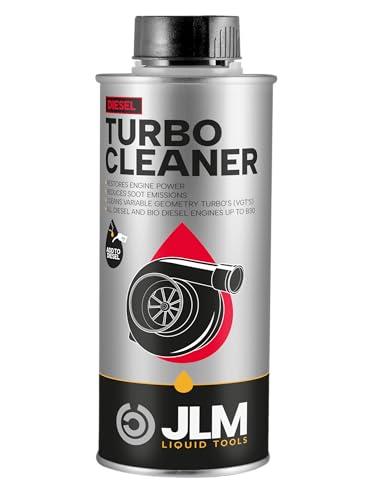
- Best for: Daily diesel drivers who want a repeatable maintenance dose for turbo deposits.
- 500ml pour-in additive for diesel engines
- Model number JLM-J02380
- One bottle treats up to 70 litres of diesel fuel
- Cleans variable-geometry turbos and reduces soot emissions
All 5 Picks at a Glance
| Product | Specs | Action |
|---|---|---|
| Wynn’s Diesel Turbo Cleaner 500ml |
| Check price on Amazon |
| Wynn’s Turbo Cleaner 200ml |
| Check price on Amazon |
| JLM Diesel Turbo Cleaner 500ml |
| Check price on Amazon |
 Archoil AR6400-D 12 oz |
| Check price on Amazon |
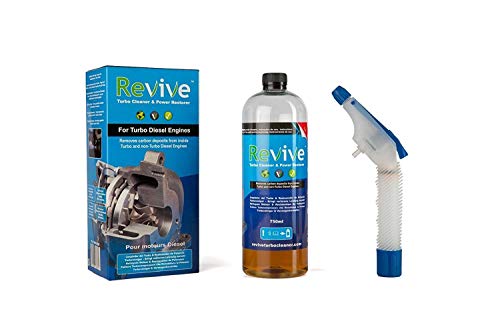 REVIVE Turbo Cleaner Kit Diesel |
| Check price on Amazon |
Key takeaways
- Compare the 5 best diesel turbo cleaners for soot, sticking vanes, and lost power, with pour-in additives and intake sprays listed by real Amazon ASIN.
A diesel turbo rarely fails without warning. More often it loses its edge slowly: soot and carbon build up on the variable-geometry vanes, the vanes stick, boost arrives late, and the truck feels flat when towing or merging. A cleaner can help only if it reaches the deposits, so the real decision is not which brand looks strongest on the shelf. It is whether the product treats the turbo itself through the fuel system, or whether it is sprayed into the intake while the engine runs.
This article is for diesel owners dealing with sluggish boost, soot-related warning lights, or sticking vanes, and for owners who want a maintenance treatment before problems start. The five products below were chosen from names and specifications on Amazon product pages, and each one states its application method openly so you can match the treatment to your engine and your comfort level.
Quick Picks
As an Amazon Associate we earn from qualifying purchases
| Product | Best for | Key spec from title |
|---|---|---|
| Wynn’s Diesel Turbo Cleaner 500ml | Sticking vanes and soot | Pour-in additive, model 18753 |
| Wynn’s Turbo Cleaner 200ml | Direct intake spray | Foam spray, part WYN28679 |
| JLM Diesel Turbo Cleaner 500ml | Power restoration | Pour-in, treats 70 litres |
| Archoil AR6400-D 12 oz | Deep fuel system clean | Pour-in, treats 30-40 gallons |
| REVIVE Turbo Cleaner Kit Diesel | No-disassembly kit clean | Spray kit with nozzle |
How to Choose
Pour-In Additive or Intake Spray
Pour-in additives go into the fuel tank and work through the fuel system, so they suit owners who want the simplest possible treatment. You add the bottle before filling up, then drive for twenty to thirty minutes at higher engine speed. Intake sprays are applied at the turbo inlet with a warm engine running, which puts the cleaner directly on the turbo geometry but demands more care. Short spray intervals matter, because a long burst can spike engine speed. Pick the pour-in route if you want a low-effort treatment, and pick a spray or a kit only if you are comfortable working around a running engine.
What the Cleaner Actually Targets
Not every bottle labelled for diesels cleans the turbo. Some products clean injectors only, some focus on the diesel particulate filter, and some are general maintenance additives with a cetane boost. A genuine turbo cleaner states that it removes carbon and soot from the turbocharger, frees sticking variable-geometry vanes, or cleans the diesel oxidation catalyst and EGR valve. Read the listing for those exact targets before buying. If the listing talks only about injectors, cetane, or lubrication, it may help the fuel system without ever touching the deposits that are slowing your turbo.
Dose, Tank Size, and Treatment Interval
Every pour-in cleaner has a defined dose, and the dose decides whether one bottle is enough. JLM Diesel Turbo Cleaner treats up to 70 litres of diesel per 500ml bottle, while Archoil AR6400-D treats 30 to 40 gallons per 12 oz bottle, so check your tank size against the dose before ordering. Treatment interval matters too: Archoil suggests a deep clean every 5,000 miles, and JLM suggests use every 5,000 kilometres as preventative maintenance. A spray is different again, since one can or one kit is one treatment. Buying the right quantity up front avoids a half-treated tank.
Compatibility and Safety Limits
Check three limits before you buy. First, confirm the product is made for diesel engines, since some sprays also suit petrol engines and some additives are diesel-only. Second, confirm compatibility with your emissions equipment, including the diesel particulate filter and EGR system, because a cleaner that is not safe for those parts can create a bigger problem than the one it solves. Third, respect the application warnings: sprays must be used with the engine running and the intake hose removed at the right point, and no cleaner can fix a turbo with worn bearings, a cracked housing, or a failed actuator.
The 5 Best Options
Wynn’s Diesel Turbo Cleaner 500ml
- Best for: Diesel owners who want a simple pour-in treatment for sticking vanes and soot.
- 500ml pour-in additive for diesel engines
- Model number 18753
- Removes carbon build-up and frees sticking vanes
- Cleans the diesel oxidation catalyst and EGR valve
Diesel owners who want a simple pour-in treatment for sticking vanes and soot.
Confirm the bottle is the 500ml diesel version, model 18753, since Wynn’s sells a separate 200ml spray with a similar name.
Wynn’s Diesel Turbo Cleaner is the most direct pour-in option in this article, made for diesel owners who want to treat carbon build-up without removing the turbo. It is added to the fuel tank and works through the fuel system, targeting deposits on the turbocharger while also cleaning the diesel oxidation catalyst and the EGR valve. That combination suits trucks showing early signs of sticking vanes, such as delayed boost or a soot-related warning, and it fits a simple maintenance routine because the treatment is one bottle in the tank followed by a drive.
Wynn’s Turbo Cleaner 200ml
- Best for: Owners who want a direct spray treatment on the turbo inlet.
- 200ml aerosol foam spray
- Part number WYN28679, model 1831075
- Dissolves gum, lacquer, tar, carbon, and varnish
- Cleans and unblocks turbocharger geometry with or without dismantling
Owners who want a direct spray treatment on the turbo inlet.
Spray in short intervals only, since a long burst can cause a sudden rise in engine speed and knocking.
Wynn’s Turbo Cleaner is the spray option in this article, an aerosol that produces a foam to dissolve gum, lacquer, tar, carbon, and varnish on turbocharger geometry. It is sprayed into the inlet side of the turbo with a warm engine running, in short intervals, until the 200ml can is used up, and it works with or without dismantling the unit. That direct approach suits owners who want the cleaner on the turbo itself rather than routed through the fuel system, and the same formula is stated for both diesel and petrol turbo engines.
JLM Diesel Turbo Cleaner 500ml
- Best for: Daily diesel drivers who want a repeatable maintenance dose for turbo deposits.
- 500ml pour-in additive for diesel engines
- Model number JLM-J02380
- One bottle treats up to 70 litres of diesel fuel
- Cleans variable-geometry turbos and reduces soot emissions
Daily diesel drivers who want a repeatable maintenance dose for turbo deposits.
Add the bottle to a nearly empty tank before filling, then drive twenty to thirty minutes at higher engine speed for the treatment to work.
JLM Diesel Turbo Cleaner is a professional-grade pour-in additive built around one job: restoring the performance of a diesel turbocharger by removing dirt and soot from the variable-geometry turbo. The maker states that one 500ml bottle treats up to 70 litres of diesel, and suggests use every 5,000 kilometres as preventative maintenance. That clear dosing suits owners who run the same truck daily and want a repeatable treatment, and the formula is stated for all diesel engines, including biodiesel blends up to B30.
Archoil AR6400-D 12 oz
- Best for: High-mileage diesels needing a deep clean across injectors, turbo, and DPF.
- 12 oz pour-in fuel system cleaner for diesel engines
- One bottle treats 30 to 40 gallons of diesel
- Deep cleans injectors with turbo and DPF deposit control
- Rapid-acting formula for rough idle and reduced power
High-mileage diesels needing a deep clean across injectors, turbo, and DPF.
Do not confuse the single 12 oz bottle with the four-pack listing, which is a different Amazon listing.
Archoil AR6400-D is a rapid deep-clean fuel system treatment that lists turbo and DPF deposit control alongside injector cleaning, which makes it the broadest pour-in pick in this article. One 12 oz bottle treats 30 to 40 gallons of diesel, and the maker suggests a deep clean every 5,000 miles. That scope suits high-mileage diesels showing rough idle, reduced power, or poor spray patterns, where the problem may span injectors, turbo, and DPF at once. It is a single-bottle treatment poured into the fuel tank, with no tools or disassembly involved.
REVIVE Turbo Cleaner Kit Diesel
- Best for: Owners with sticking vanes who want a targeted kit clean without removing the turbo.
- Spray kit with nozzle for diesel engines, model 1449-9000
- Water-based, non-toxic, and non-flammable fluid
- Cleans turbo, intake, EGR valve, and vanes without disassembly
- Used with the engine running through the cold air intake
Owners with sticking vanes who want a targeted kit clean without removing the turbo.
Confirm your engine size first, since the single-application kit is sized for engines under 5 litres and larger pickups need the Big-T kit.
REVIVE Turbo Cleaner Kit is the only kit in this article, pairing a water-based cleaning fluid with a spray nozzle so the treatment reaches the turbo through the cold air intake while the engine is running. The fluid is stated as non-toxic, non-flammable, and biodegradable, and the kit is made for cleaning soot and carbon from the turbo, intake, EGR valve, and vanes without disassembly. That approach suits owners with sticking or jamming vanes who want a targeted clean, and the single-application kit is sized for engines under 5 litres, with a larger Big-T kit offered for big-displacement pickups.
Which One Fits Your Situation
Your Turbo Feels Sluggish and Vanes May Be Sticking
Pick Wynn’s Diesel Turbo Cleaner 500ml for the simplest first step, since it is a pour-in treatment aimed at carbon build-up and sticking vanes. If the problem persists after a full treatment and a drive, pick the REVIVE kit next, because its intake spray puts the cleaner on the turbo geometry. A cleaner cannot fix worn bearings or a failed actuator, so a turbo that still sticks needs a mechanic.
You Want Routine Maintenance for a Daily Diesel
Pick JLM Diesel Turbo Cleaner for a repeatable routine, since its maker states a clear dose of one bottle per 70 litres and a 5,000 kilometre interval. Archoil AR6400-D is the alternative if you also want injector and DPF deposit control in the same treatment. Either way, set a reminder for the next treatment instead of waiting for symptoms, because deposits build gradually and are easier to manage early.
You Tow Heavy Loads With a Large Pickup
Pick Archoil AR6400-D for a broad deep clean across the fuel system, turbo, and DPF, since towing puts sustained load on all three. If your main symptom is sticking vanes, pick the REVIVE kit instead, but confirm the Big-T kit if your engine is over 5 litres, because the single-application kit is sized for smaller engines. Check DPF and EGR compatibility on the listing before either treatment.
You Want the Easiest Possible Treatment
Pick Wynn’s Diesel Turbo Cleaner or JLM Diesel Turbo Cleaner, since both are pour-in additives with no tools and no work around a running engine. Add the bottle before filling the tank, then drive at higher engine speed for twenty to thirty minutes. Avoid the spray and kit options for a first treatment unless you are comfortable removing the intake hose and spraying in short intervals.
Common Mistakes
- Buying a general diesel additive and expecting it to clean the turbo, when the listing only mentions injectors, cetane, or lubrication
- Using a spray with long continuous bursts instead of short intervals, which can spike engine speed and cause knocking
- Treating a tank that is too large for one bottle, so the dose is too weak to clean anything
- Expecting a cleaner to fix a turbo with worn bearings, a cracked housing, or a failed actuator
- Skipping the drive after a pour-in treatment, when the cleaner needs heat and load to work through the system
Frequently Asked Questions
Can a diesel turbo cleaner fix a turbo in limp mode?
A cleaner can help if limp mode comes from soot or carbon sticking the variable-geometry vanes, since the treatment targets those deposits. It cannot fix limp mode caused by a failed actuator, a boost leak, a faulty sensor, or worn bearings. If the warning returns soon after treatment, have the turbo and the boost system checked rather than repeating the treatment.
How often should I use a diesel turbo cleaner?
Pour-in treatments state their own interval, and the two in this article suggest a deep clean every 5,000 miles or every 5,000 kilometres as preventative maintenance. Use the interval on the product you buy, and treat sooner if you notice delayed boost, rough idle, or rising soot. More frequent treatment does not replace servicing a turbo that is already worn.
Is a spray cleaner better than a pour-in additive?
A spray puts the cleaner directly on the turbo geometry, which suits targeted cleaning of sticking vanes, but it needs care around a running engine and short spray intervals. A pour-in additive is simpler and treats the fuel system as well, which suits routine maintenance. Neither is better in every case, so match the method to the symptom and your comfort level.
Are these cleaners safe for DPF and EGR systems?
The products in this article state DPF and EGR compatibility on their listings, including Wynn’s Turbo Cleaner spray and Archoil AR6400-D. Always confirm that statement on the listing for the exact bottle you buy, since formulas and listings change. If a listing does not mention your emissions equipment, do not assume it is safe.