Our Short List of 3
All 3 Picks at a Glance
| Product | Specs | Action |
|---|---|---|
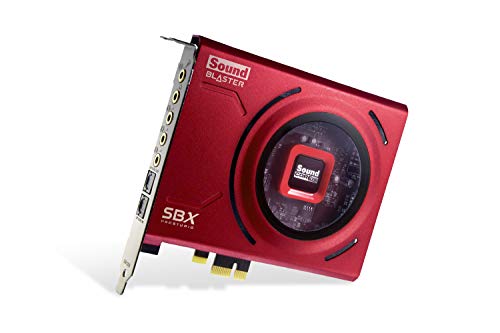 Creative Sound Blaster Z SE | Check price on Amazon | |
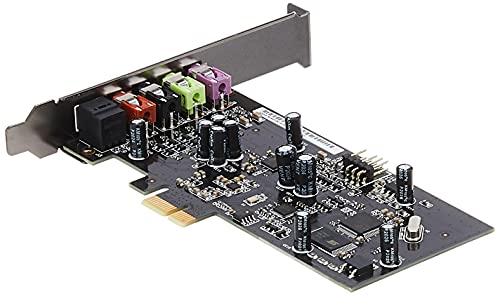 ASUS Xonar SE | Check price on Amazon | |
 Creative Sound Blaster Audigy FX | Check price on Amazon |
Key takeaways
- Three internal PCIe sound cards with 64-bit Windows driver support, compared on surround output, headphone amplifiers and recording inputs.
Disclosure: As an Amazon Associate, we earn from qualifying purchases.
Our top pick: Creative Sound Blaster Z SE. Runner-up: ASUS Xonar SE.
A sound card for a 64-bit Windows PC has to clear a hurdle that has nothing to do with audio quality: its maker has to publish a working 64-bit driver package for a current Windows version. Plenty of older cards sound fine on paper and are useless in practice because driver support stopped years ago. The three internal PCIe cards in this guide are established models from Creative and ASUS, the two makers that have kept internal sound cards in production, and each one was checked against listing information for the exact model named here. This guide covers only those three models rather than padding the list with cards whose listings or driver support could not be confirmed.
One caution applies to the whole guide. These are mature card designs, and the listing details recorded for them come from secondary copies of the product pages rather than from a single definitive source. Treat the figures below as the specification to verify, not as a guarantee: before buying, open the live listing, confirm the model number matches the one named in each section, and check the maker’s support page for a 64-bit driver package that covers your Windows version. That two-minute check matters more with this product type than with almost any other PC component.
Quick Picks
- Creative Sound Blaster Z SE — Best overall: 116 dB SNR, ASIO support for recording work, a 600-ohm headphone amplifier and discrete 5.1 output with virtual 7.1 processing.
- ASUS Xonar SE — Best alternative: the same headline playback figures as the Z SE, with a 300-ohm headphone amplifier and a microphone input.
- Creative Sound Blaster Audigy FX — Best for compact cases: a half-height PCIe card with 5.1 output, SBX Pro Studio processing and separate line-in and microphone connectors.
Creative Sound Blaster Z SE
OUR TOP PICK
The Sound Blaster Z SE is the most complete card in this guide, and the one that suits a 64-bit Windows machine used for both listening and recording. As recorded from the listing copies checked for this guide, it is a PCIe x1 card with 24-bit/192 kHz playback, a 116 dB signal-to-noise ratio, and support for discrete 5.1 output alongside virtual 7.1 processing for headphones and stereo speakers. It also carries Dolby Digital Live and DTS encoding, which is the relevant detail for anyone sending surround sound from a PC to a home theatre receiver over an optical connection.
The recording side is where the Z SE separates itself from the other two cards here. The listing information records ASIO support, which is what recording and production software on Windows uses for low-latency input, together with microphone EQ and voice morphing tools in the Creative software suite. A card without ASIO can still record through the standard Windows audio path, but latency is higher and monitoring through software effects becomes harder to work with. For a machine that handles voice work, streaming or home recording alongside games and films, that difference is practical rather than theoretical.
The headphone output is the other strong point. The recorded specification lists a headphone amplifier rated for headphones up to 600 ohms, which covers the demanding end of the headphone market as well as ordinary models. Combined with the 116 dB SNR figure, the Z SE is the card here least likely to leave audible hiss behind quiet passages when paired with sensitive headphones. As with every figure in this guide, confirm the model number, 70SB150000004, on the live listing before buying, because the wider Sound Blaster Z family includes earlier variants with different feature sets.
In daily use, the Z SE also suits a desk where speakers and headphones swap often. A 5.1 speaker set can stay wired to the analogue outputs while headphones connect for late sessions, and the Creative software handles the switching and processing profiles for each. That is the pattern an internal card has to serve well: one fixed machine, several listening setups, and no appetite for re-plugging cables behind the case every evening.
Specs
– Model: 70SB150000004, as recorded from the listing copies
– Interface: PCIe x1
– Playback: 24-bit/192 kHz, as recorded from the listing copies
– Signal-to-noise ratio: 116 dB, as recorded from the listing copies
– Output: discrete 5.1, virtual 7.1 processing, Dolby Digital Live and DTS encoding
– Recording: ASIO support, microphone EQ and voice morphing, as recorded from the listing copies
– Headphone amplifier: rated up to 600 ohms, as recorded from the listing copies
Pros
– ASIO support makes it the strongest of the three for recording and production software
– 116 dB SNR and a 600-ohm headphone amplifier cover demanding headphones
– Discrete 5.1 output plus Dolby Digital Live and DTS encoding for receiver setups
Cons
– Listing details rest on secondary copies, so the model number needs confirming on the live page
– Virtual 7.1 is processing applied to headphones or stereo speakers, not discrete channels
– Needs a free PCIe slot, which small or fully populated boards may not have spare
ASUS Xonar SE
The ASUS Xonar SE is the closest match to the Z SE on headline figures, and the sensible runner-up for a listener-first machine. As recorded from the listing copies checked for this guide, it is a PCIe card with 5.1 output, 192 kHz/24-bit high-resolution playback and a 116 dB signal-to-noise ratio, matching the Creative card’s two most quoted numbers. It includes a headphone amplifier rated up to 300 ohms and a microphone input, so headsets and voice chat are covered without extra hardware.
The differences from the Z SE sit in the details rather than the headline numbers. The headphone amplifier’s 300-ohm rating covers the large majority of headphones people actually use with a desktop PC, including most studio and gaming models, but leaves less headroom for the most demanding high-impedance designs than the Creative card’s 600-ohm rating. The listing information recorded for the Xonar SE does not include ASIO support or live surround encoding of the Dolby Digital Live type, so it reads as a playback-focused card: strong for music, films and games through speakers or headphones, less specialised for recording work or for feeding a receiver a live-encoded surround stream.
For music listening in particular, the Xonar SE’s recorded figures are the ones that matter: high-resolution playback to 192 kHz and a 116 dB signal-to-noise ratio describe a clean stereo path, and the 5.1 output covers film and game duties on a speaker set. ASUS has a long history with the Xonar line, which is some reassurance on the driver question that dominates this product type, though the support-page check described later in this guide still applies to this card exactly as it does to the other two.
This is also the card where the buying check matters most. Listing copies for the Xonar SE name have appeared under more than one ASIN, and the copies checked for this guide did not agree on every detail. The model number to match is 90YA00T0-M0UA00. If the live listing shows a different model number, a different channel count or a different amplifier rating, treat it as a different product and do not rely on the figures in this section. With that check done, the Xonar SE is a well-judged middle path: hi-res playback figures equal to the top pick, a capable headphone stage, and a microphone input for everyday voice use.
Specs
– Model: 90YA00T0-M0UA00, as recorded from the listing copies
– Interface: PCIe
– Playback: 192 kHz/24-bit high-resolution audio, as recorded from the listing copies
– Signal-to-noise ratio: 116 dB, as recorded from the listing copies
– Output: 5.1 channels
– Headphone amplifier: rated up to 300 ohms, as recorded from the listing copies
– Input: microphone input
Pros
– Playback resolution and SNR figures match the top pick on paper
– 300-ohm headphone amplifier covers most desktop headphones
– Microphone input included for headsets and voice chat
Cons
– Listing copies for this model name conflict, so the live listing must be checked carefully against the model number
– No ASIO support recorded in the listing information checked
– Headphone amplifier rating is lower than the Z SE, leaving less headroom for high-impedance headphones
Creative Sound Blaster Audigy FX
The Sound Blaster Audigy FX is the simplest card in this guide and the one that fits where the other two cannot. As recorded for the model SB1570, it is a half-height PCIe x1 card, supplied with interchangeable full-height and half-height brackets, which makes it the natural choice for small-form-factor and home theatre PCs whose cases cannot take a full-height card. It produces 5.1 surround output and applies Creative’s SBX Pro Studio processing suite to films, music and games.
The SBX Pro Studio suite is the card’s main processing feature. It is Creative’s software layer for widening the sense of surround from the available speakers, restoring some of the detail that compressed audio files and streams lose, strengthening bass, and keeping dialogue clear at low listening volumes. None of that changes the underlying hardware figures, but for film nights and casual gaming through a modest 5.1 speaker set it is a large part of what an owner actually hears, and it is the clearest step up from plain motherboard audio that this card provides.
Its figures are a step below the two cards above, and the guide should be plain about that. Playback is 24-bit/192 kHz through the digital-to-analogue converter, recording is 24-bit/96 kHz, and the signal-to-noise ratio is 106 dB rather than 116 dB. In a quiet room with sensitive headphones that gap can be audible as background hiss; through ordinary speakers in a normal living space it is far less likely to matter. The listing information records a headphone amplifier rated at 600 ohms, which is generous for a card at this level, and separate line-in and microphone connectors, so an external source and a microphone can stay connected at the same time instead of sharing one socket.
Two checks apply before buying this card. First, mirror copies of this listing disagree with each other, including on the ASIN itself, so confirm that the live page names the Audigy FX, model SB1570, and not a neighbouring model. Second, Creative sells a newer card with a similar name, the Audigy FX V2, which has different figures and a different feature set; nothing in this section describes the V2, and its numbers should not be read across. Chosen with those checks done, the Audigy FX is a tidy upgrade from motherboard audio for a compact machine, with surround output and processing that integrated audio does not match.
Specs
– Model: SB1570, as recorded for this listing
– Interface: PCIe x1, half-height, with full-height and half-height brackets included
– Playback: 24-bit/192 kHz DAC, as recorded for this listing
– Recording: 24-bit/96 kHz ADC, as recorded for this listing
– Signal-to-noise ratio: 106 dB, as recorded for this listing
– Output: 5.1 surround with SBX Pro Studio processing
– Headphone amplifier: rated at 600 ohms, as recorded for this listing
– Inputs: separate line-in and microphone connectors
Pros
– Half-height card with both bracket sizes included, suiting compact and home theatre cases
– 5.1 output with SBX Pro Studio processing for films and games
– Separate line-in and microphone connectors can stay plugged in together
Cons
– 106 dB SNR is the lowest figure in this guide and may show as hiss with sensitive headphones
– Mirror listing copies conflict, including on the ASIN, so the model number check is essential
– Easy to confuse with the newer Audigy FX V2, which is a different card with different figures
How to Choose
Begin with the driver, not the hardware. For a 64-bit Windows machine, the card is only usable if Creative or ASUS publishes a 64-bit driver package covering your Windows version. Go to the maker’s support page for the exact model number, confirm a current 64-bit package exists, and only then compare audio figures. A driver disc in the box is not evidence of support, since these are mature designs and the disc can predate your operating system by years. This single check is the difference between a sound card and a slot filler.
Next, check the physical fit. All three cards here use a PCIe connection, and a x1 card fits in any larger PCIe slot as well, so a free x4 or x16 slot works when no x1 slot is open. Case height is the other constraint: the Audigy FX is a half-height card with both brackets in the box, while a compact case may not close over a full-height card. Measure before ordering rather than after.
Then match the output to the speakers or receiver actually in the room. A 5.1 speaker set needs discrete analogue outputs, which all three cards provide. A receiver fed by optical cable is a different case: live encoding such as the Dolby Digital Live and DTS support recorded for the Z SE is what turns game audio into a surround stream a receiver can decode, and without it an optical link usually carries stereo only. Headphone listeners should look at the amplifier rating instead: 300 ohms covers most headphones, while the 600-ohm ratings recorded for the two Creative cards suit high-impedance models.
It also helps to understand the signal-to-noise figures, because they are the numbers most often compared. The figure describes how far the wanted signal sits above the card’s own noise floor, so a higher number means quieter backgrounds in quiet material. The gap between the 116 dB recorded for the Z SE and Xonar SE and the 106 dB recorded for the Audigy FX is real, and it shows first through sensitive headphones in silent passages, not through speakers in a noisy room.
Finally, be honest about recording. If the machine will handle voice work, streaming or music production through Windows recording software, ASIO support is the feature that keeps latency manageable, and among these three it is recorded only for the Z SE. If recording means a headset microphone for calls and chat, any of the three will do, and the choice can rest on fit, output and headphone pairing instead.
FAQs
How do I check 64-bit Windows driver support before buying a sound card?
Use the model number, not the product name. Find the exact model number from the section for the card you are considering, enter it on the maker’s support site, and look for a driver package that names a 64-bit edition of your Windows version. If the newest package predates your operating system or lists only 32-bit editions, treat the card as unsupported for your machine, whatever the listing headline says. Doing this before ordering takes minutes and prevents the most common failure with this product type.
Which of these cards suits headphones best?
On the figures recorded for this guide, the Sound Blaster Z SE pairs the joint-highest signal-to-noise ratio, 116 dB, with a headphone amplifier rated up to 600 ohms, so it suits demanding headphones and quiet listening. The Xonar SE matches the 116 dB figure with a 300-ohm amplifier, which is enough for most headphones in normal desktop use. The Audigy FX also records a 600-ohm amplifier rating, but its 106 dB SNR means sensitive headphones are more likely to reveal background hiss in quiet passages.
Which card fits a small-form-factor or home theatre PC?
The Sound Blaster Audigy FX is the fit-first choice of the three: it is a half-height PCIe x1 card and the box includes both full-height and half-height brackets, so it installs in slim cases that cannot take a full-height card. Confirm the live listing names model SB1570, and leave room in the plan for its lower 106 dB SNR figure compared with the other two cards. For a full-size tower, fit is rarely the deciding factor and the Z SE or Xonar SE will usually serve better.
Conclusion
For most 64-bit Windows desktops, the Creative Sound Blaster Z SE is the top pick: it combines 116 dB SNR, a 600-ohm headphone amplifier, discrete 5.1 output with live surround encoding, and the ASIO support that recording software on Windows needs. The ASUS Xonar SE is the runner-up for listener-first machines, matching the headline playback figures with a 300-ohm headphone stage and a microphone input. The Sound Blaster Audigy FX is the compact-case option, a half-height card with 5.1 output and SBX Pro Studio processing. Whichever card you choose, run the two checks this guide returns to: match the model number on the live listing, and confirm a current 64-bit driver package on the maker’s support page before you buy.