Our Short List of 3


All 4 Picks at a Glance
| Product | Specs | Action |
|---|---|---|
| 1. WEIZE Platinum AGM Group 48 (H6) — Best for the 3.2-Litre XC90 | Check price on Amazon | |
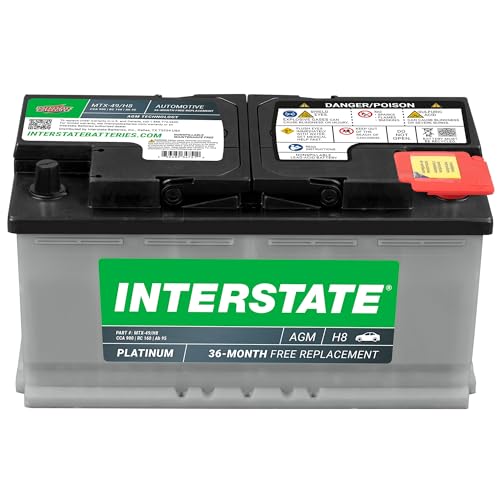 2. Interstate Batteries MTX-49/H8 — Best Group 49 Pick for the V8 | Check price on Amazon | |
| 3. WEIZE Platinum AGM Group 49 (H8) — High Capacity at the Larger Size | Check price on Amazon | |
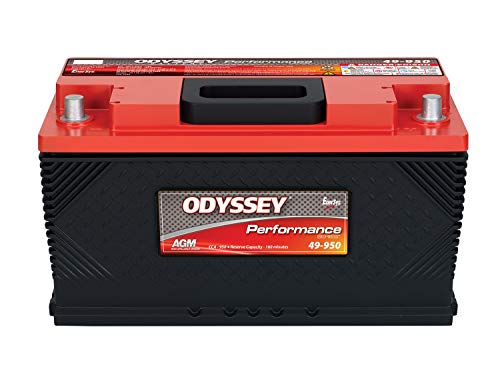 4. Odyssey Performance ODP-AGM49 (49-950) — Premium Group 49 Option | Check price on Amazon |
Key takeaways
- Find the best battery for a 2008 Volvo XC90: Group 48 H6 for the 3.2, Group 49 H8 for the V8, with CCA, reserve capacity and fitment checks explained.
As an Amazon Associate we earn from qualifying purchases.
Affiliate Disclosure: This article contains affiliate links. If you buy through a link on this page, we may earn a commission at no extra cost to you. Specifications are taken from manufacturer and retailer product listings, and fitment should always be confirmed against your vehicle before ordering.
The 2008 Volvo XC90 does not take one single battery, and that is the most important thing to understand before buying anything. This model year was sold with different engines, and Volvo fitted different battery sizes depending on which engine is under the bonnet. The six-cylinder petrol models were specified with a smaller case, while the V8 was specified with a larger, higher-capacity case. Buying by year and model alone, without checking the engine, is how owners end up with a battery that is physically too long for the tray, too weak for the engine it has to start, or fitted with the terminals in the wrong place. This guide works through the correct fitment first, then recommends specific batteries for each version of the car.
There is a second complication specific to this generation of XC90. The battery is not in the engine bay. On the first-generation XC90 the battery lives at the rear of the vehicle, under the cargo area floor on the left side. That location keeps it away from engine heat, which helps service life, but it makes correct sizing, the hold-down arrangement, and the venting arrangement more important, because a battery that almost fits is not good enough when it has to sit securely in a compartment inside the cabin envelope. It also makes the job of changing it a little different from the usual under-bonnet swap, which we cover in the installation section below.
The Correct Fitment for a 2008 XC90
For the petrol five- and six-cylinder versions of the XC90 from this era, which for the 2008 model year in the United States means the 3.2-litre inline six, Volvo’s specification is an H6 case, known in North America as BCI Group 48. The original specification for that fitment is a 12-volt battery of around 72 amp hours with a cold cranking rating of around 600 amps. Retail fitment catalogues for the 2007 to 2014 XC90 likewise list Group 48 as the standard size for these cars, with ratings in the 610 to 800 CCA range across the batteries offered. In practical terms, a modern Group 48 AGM battery comfortably exceeds the original cranking figure while keeping the exact case dimensions and terminal layout the tray was designed for, which is why most of our recommendations for the 3.2 are Group 48 AGM units.
For the 4.4-litre V8 model, Volvo’s specification steps up to an H8 case, known as BCI Group 49, rated at around 90 amp hours and around 800 amps of cranking power. The diesel versions sold in other markets used the same larger specification, although diesel XC90s were not sold in the United States. The larger case is substantially longer than the Group 48 case, so the two are not interchangeable by guesswork. Some XC90 trays and hold-down arrangements can accommodate the longer battery, and some owners of six-cylinder cars choose to fit the larger case for extra reserve capacity, but that should only be done after physically measuring the tray, confirming the hold-down can secure the longer case, and checking that the cables reach comfortably. If you are ordering a like-for-like replacement, match the group size of the battery that is in the car now.
Terminal layout matters as much as case size. These European fitments use recessed top terminals with the positive terminal on the right when the terminals are facing you, and the cable arrangement in the rear compartment leaves little slack for improvisation. Before ordering, compare the terminal position in the listing photographs with the battery you are removing, and confirm the new battery is a standard automotive starting battery in the correct group, not a deep-cycle or marine unit that happens to share similar dimensions. A marine battery is the wrong tool for this job even if it physically drops into the tray.
Cold cranking amps deserve a word of explanation, because the numbers in listings can mislead. CCA is the current a battery can deliver at zero degrees Fahrenheit for thirty seconds while maintaining usable voltage. Your replacement should meet or exceed the original rating for your engine. Exceeding it is fine and generally helpful in cold climates. Falling short is not fine, particularly on the V8, whose starter has to turn over a much larger engine on a freezing morning. Reserve capacity, expressed in minutes, tells you how long the battery can run the car’s electrical loads if the alternator fails, and it is a useful tiebreaker between two batteries with similar cranking figures, especially on a vehicle with heated seats, a powered tailgate, and other heavy accessory loads like the XC90.
Our Recommended Batteries
The four batteries below are all AGM starting batteries in the two correct group sizes for this vehicle. Two serve the Group 48 fitment for the 3.2-litre car and two serve the Group 49 fitment for the V8. All specifications are taken from the manufacturers’ and retailers’ product listings. Confirm the group size for your engine, and the terminal layout, before ordering any of them.
1. WEIZE Platinum AGM Group 48 (H6) — Best for the 3.2-Litre XC90
The WEIZE Platinum AGM in BCI Group 48 is the natural starting point for the majority of 2008 XC90s on American roads, because the 3.2-litre inline six is the most common engine in this model year and Group 48 is its correct size. The listing gives this battery a capacity of 70 amp hours, a cold cranking rating of 760 CCA, and a reserve capacity of 120 minutes, in a case measuring 10.94 by 6.89 by 7.48 inches. Those cranking and reserve figures sit comfortably above the original specification for the six-cylinder car, which means cold starts are covered with margin to spare, while the case dimensions are the standard Group 48 footprint the tray and hold-down were built around.
As an AGM design it is sealed and maintenance free, which suits the XC90’s in-cabin rear battery location well, since there are no filler caps to check and the electrolyte is absorbed in glass mat separators rather than sitting as free liquid. The listing states a 36-month warranty and tapered terminals with the negative terminal on the left and positive on the right, which is the layout to compare against your old battery before fitting. For a 3.2 owner who wants a straightforward like-for-like replacement with modern AGM construction and headroom over the factory cranking specification, this is the pick that asks the fewest questions.
2. Interstate Batteries MTX-49/H8 — Best Group 49 Pick for the V8
For the 4.4-litre V8, the Interstate MTX-49/H8 is a Group 49 AGM battery from one of the most established battery brands in North America, and its headline figures match what the big engine asks for. The listing describes a 12-volt battery with 95 amp hours of capacity and a 900 CCA rating, in the Group 49, or H8, case measuring approximately 13.94 by 6.94 by 7.5 inches. That cranking figure is well above the V8’s original specification of around 800 amps, and the capacity matches the larger factory fitment, so this battery restores the car to its intended specification rather than merely approximating it.
Interstate describes the MTX line as a pure-lead AGM design intended for long life, and the range carries a 36-month free replacement period in the manufacturer’s published line information. The practical advantage of choosing an Interstate for a vehicle like this is the dealer and installer network behind the brand, which makes warranty handling simpler than with a purely online brand if a problem appears years later. V8 owners should still do the standard checks: confirm the longer Group 49 case is what is currently fitted, verify the terminal orientation matches, and make sure the vent connection in the rear compartment is transferred to the new battery during installation.
3. WEIZE Platinum AGM Group 49 (H8) — High Capacity at the Larger Size
The WEIZE Platinum AGM Group 49 is the larger sibling of our Group 48 recommendation, built into the H8 case for V8 cars and for any XC90 whose tray genuinely takes the longer battery. Its listing states 95 amp hours of capacity, 900 CCA, and a reserve capacity of 160 minutes, with case dimensions of 13.9 by 6.89 by 7.48 inches and a model number of QTF-95. On paper those are strong figures for this application: cranking power comfortably above the V8’s original requirement, and enough reserve capacity to support the XC90’s heavy accessory loads during long periods of electrical demand.
Like the smaller WEIZE, it is a sealed AGM unit with a 36-month warranty stated in the listing, tapered terminals, negative on the left and positive on the right, and no maintenance requirements in service. That combination makes it a sensible choice for a V8 owner who wants the larger factory specification in a modern AGM battery without paying for a premium brand name. The same caution applies as with any Group 49 purchase for this car: measure first if your car is a six-cylinder model, because this case is roughly three inches longer than the Group 48 battery, and length is the dimension owners most often get wrong when ordering from a photograph.
4. Odyssey Performance ODP-AGM49 (49-950) — Premium Group 49 Option
The Odyssey Performance battery for this fitment, sold under the part number ODP-AGM49 and the earlier designation 49-950, is the premium option in the Group 49 size. Odyssey’s own technical data for this model describes a thin plate pure lead AGM battery rated at 950 CCA, with a nominal capacity of 94 to 95 amp hours and a reserve capacity listed between 180 and 190 minutes depending on the datasheet revision. Those are the strongest cranking and reserve figures in this guide, and they suit a V8 XC90 that lives in a cold climate, makes frequent short trips, or carries a heavy load of electrical accessories.
Pure lead AGM construction is also associated with strong charge acceptance, which matters on a vehicle used for short journeys where the alternator has limited time to replace the charge used at starting. This is a battery aimed at owners who plan to keep the car for many more years and want to fit the most capable unit the tray will accept. It is a Group 49 battery, so everything said above about confirming the longer case applies, and its weight, at over sixty pounds according to published data for this model, is worth planning for given that the XC90 battery has to be lifted into a rear compartment rather than simply dropped into an engine bay.
How to Choose Between Group 48 and Group 49
If you remember one rule from this guide, make it this: buy the group size that matches your engine and your tray, not the biggest battery you can find. For a 3.2-litre car that came with a Group 48 battery, a good Group 48 AGM already exceeds the original cranking specification by a wide margin, and it will fit the hold-down exactly as designed. There is no benefit to forcing a longer case into a car that does not need it, and there is real risk in a battery that is not properly secured in a compartment inside the vehicle.
Choose Group 49 if your car is the V8, if the battery you are removing is already a Group 49, or if you have measured the tray on a six-cylinder car and confirmed that the longer case fits with the hold-down properly engaged and the cables reaching without strain. Within your correct size, prioritise meeting or exceeding the original CCA figure, then compare reserve capacity, then consider warranty and brand support. Construction type is the final factor: AGM is the better match for this vehicle because the battery sits inside the body of the car, where a sealed, spill-resistant design is a genuine advantage rather than a marketing extra, and because AGM batteries tolerate the charge and discharge pattern of a heavily equipped SUV well.
It is also worth checking the age and condition of what else is in the charging system before blaming every starting problem on the battery. A failing alternator, a corroded ground connection in the rear compartment, or a parasitic drain can each present exactly like a weak battery, and fitting an excellent new battery to a car with an unresolved drain simply gives you a more expensive battery to flatten. If your previous battery died unusually young, have the charging system and standby drain checked as part of the same job.
Fitting a Battery in the Rear Compartment
Changing the XC90’s battery is a manageable job, but the rear location changes the routine. Access is through the cargo area, by lifting the floor panel on the left side to reach the battery compartment. Before disconnecting anything, note the radio and window settings you may need to restore, and keep the key out of the ignition. Disconnect the negative terminal first, then the positive, and take care with the vent hose connection, which routes gases from the battery out of the compartment. That hose must be reconnected to the new battery. On a battery installed inside the vehicle, venting is a safety feature, not a formality.
Release the hold-down, lift the old battery out vertically, and clean the tray and terminal clamps before the new battery goes in. These batteries are heavy, and the Group 49 units especially so, so plan the lift rather than improvising it over the tailgate of the car. Seat the new battery fully, secure the hold-down so the case cannot move, connect the positive terminal first and the negative last, reconnect the vent hose, and confirm the terminals are tight. Afterwards, check that the powered tailgate, windows, and other electrical functions behave normally, and be aware that some functions on cars of this era need a short period of normal use, or a simple reinitialisation procedure described in the owner’s manual, after a battery disconnection.
Dispose of the old battery properly through the retailer or a local recycling point. Automotive batteries are among the most completely recycled products in the vehicle, and most sellers operate a return system for the old unit as part of the purchase.
Conclusion
The best battery for a 2008 Volvo XC90 depends on which XC90 you own. For the common 3.2-litre six-cylinder car, a Group 48, or H6, AGM battery such as the WEIZE Platinum Group 48 restores and exceeds the original specification in the correct case size. For the 4.4-litre V8, step up to the Group 49, or H8, size it was built with, where the Interstate MTX-49/H8, the WEIZE Platinum Group 49, and the premium Odyssey ODP-AGM49 all deliver cranking power above the factory requirement with the reserve capacity a heavily equipped SUV needs. Whichever you choose, confirm the group size against the battery in the car, check the terminal layout, reconnect the vent hose at fitting, and you will have a replacement that should give this durable Swedish SUV several more years of reliable starts.