Our Short List of 3
All 3 Picks at a Glance
| Product | Specs | Action |
|---|---|---|
 2. Celestron Sky Maps Seasonal Star Charts | Check price on Amazon | |
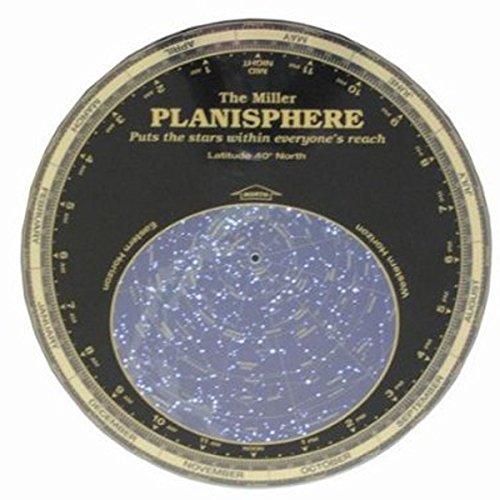 3. Miller Planisphere Star Finder Large 40 Degree | Check price on Amazon | |
 5. DK Star Finder A Step-by-Step Guide to the Night Sky | Check price on Amazon |
Key takeaways
- Five star maps and planispheres for night sky navigation compared, from rugged plastic wheels to glow-in-the-dark charts, with latitude guidance.
A phone can name every star overhead, until the battery dies, the screen wrecks your night vision, or the signal disappears at a dark sky site. A printed star map has none of those failure points. It needs no power, no updates, and no connection, and it shows the whole sky above your horizon for any date and time in a few seconds. For anyone learning to navigate by the stars, that simplicity is the point: you look at the chart, you look at the sky, and the two start to match.
The five maps below all do the same core job, which is to show which constellations are above you right now and where to look next. They differ in the ways that matter in the field: the latitude band they are drawn for, how readable they are under a red flashlight, how well they survive dew and rough handling, and how much depth they offer once the bright constellations feel familiar. Every product here is a physical star chart or planisphere sold on Amazon US.
As an Amazon Associate, we earn from qualifying purchases.
Quick Answer
If you observe from the southern half of the United States, start with the David Chandler The Night Sky large planisphere for latitudes 30 to 40 degrees north. For families and first-time observers, the DK Star Finder book teaches the method step by step, while the Celestron Sky Maps set adds seasonal deep-sky charts that glow in the dark.
1. The Night Sky 30-40 Large Planisphere by David Chandler
The Night Sky is the chart that astronomy clubs and college classes keep coming back to, and the reason is printed on its face. Most planispheres squeeze the whole sky onto one flat disc, which stretches the constellations near the southern horizon out of shape. This one uses a two-sided projection, with the northern sky on one side and the southern sky on the other, so the shapes you see on the chart match the shapes you see overhead. That matters: a distorted chart teaches you the wrong shape, and unlearning it takes longer than learning it right.
The build is equally practical. The large version is a plastic disc about 8.5 by 10 inches, with dark stars printed on a light background so it stays readable under a red flashlight without glare. It arrives in a protective vinyl pouch that doubles as storage, and the plastic surfaces resist dew far better than cardboard. The chart marks the Milky Way as a shaded band and includes a selection of deep-sky objects, so it works as a session planner as well as a finder: you can decide in advance which targets are worth pointing binoculars at. Instructions are printed on the back, so there is nothing extra to carry.
The honest limitation is latitude. This edition covers 30 to 40 degrees north, which spans the southern United States, the Mediterranean, and the northern half of India. Outside that band, the chart quietly puts the southern sky hours out of place, so buyers in the northern United States or Canada need the 40 to 50 degree edition instead. The print is also small on the fainter labels, which is the trade-off for fitting the whole sky on a disc this size.
Key specs
| Spec | Detail |
|---|---|
| Format | Rotating plastic planisphere, large |
| Latitude band | 30 to 40 degrees north |
| Size | About 8.5 by 10 inches |
| Material | Plastic with protective vinyl pouch |
| Sky coverage | Full sky, two-sided projection, Milky Way and deep-sky objects marked |
| Extras | Instructions printed on the back |
2. Celestron Sky Maps Seasonal Star Charts
Celestron Sky Maps is built like a classroom set rather than a single wheel, and that structure is its strength. The front cover is a rotating planisphere that glows in the dark after exposure to light, and inside are four seasonal star charts that walk through the deep-sky objects visible in each part of the year. Charge the cover under a bright lamp before heading out, and the major stars hold a soft glow bright enough to read by.
The charts themselves are printed on heavyweight, water-resistant card stock, with a plastic spiral binding that lets the set lie flat on a table or fold back on itself in the field. More than 1,000 stars and deep-sky objects are charted across the set, which makes it a better bridge toward telescope observing than a pure constellation wheel. The seasonal pages give right ascension and declination lines plus designations for their targets, so a beginner can start learning the star-hop method: find a bright anchor star, then follow the chart from one object to the next.
There are two real trade-offs. First, the set covers the Northern Hemisphere only, so southern observers need a different chart. Second, the front planisphere is a cover wheel rather than a full rotating disc with a date and time dial, so it frames the sky by season rather than by a specific moment. Used alongside a true planisphere, it covers both halves of the problem: this set teaches the patterns, and the wheel tells you exactly what is up right now.
Key specs
| Spec | Detail |
|---|---|
| Format | Glow-in-the-dark planisphere cover plus 4 seasonal charts |
| Latitude band | Northern Hemisphere |
| Size | About 13.75 by 11.5 inches |
| Material | Heavyweight water-resistant card stock, plastic spiral binding |
| Sky coverage | More than 1,000 stars and deep-sky objects charted |
| Extras | Seasonal deep-sky charts, illustrated reference section |
3. Miller Planisphere Star Finder Large 40 Degree
The Miller planisphere is the vintage-looking wheel of this group, and its design has survived for a reason. It is a pair of durable plastic discs about 10.5 inches across, centered on latitude 40 degrees north and usable from 35 to 45 degrees north, which covers most of the United States. The star field is printed clearly enough to read at arm’s length under a red light, and the Messier objects are marked directly on the chart, which turns an ordinary evening into a Messier hunt without opening another book.
The back of the disc carries useful reference information, including planet positions that the maker updates from time to time, with printable updates available from the product page. That is a small detail, but it shows the chart was designed by people who actually observe: planets move, and a chart that pretends otherwise goes stale. The plastic construction tolerates dew and rough handling in a bag, and the large diameter keeps the labels legible for readers who struggle with small print on smaller wheels.
The main weakness is the same as its strength: it is a single-latitude wheel. Observers well south of 35 degrees north or well north of 45 degrees will find its horizon line increasingly wrong, and travelers who observe from several latitudes will want a second chart. It is also a straightforward finder with no seasonal deep-sky pages, so observers who want guided tours of each season will get more from the Celestron set.
Key specs
| Spec | Detail |
|---|---|
| Format | Rotating plastic planisphere, large |
| Latitude band | 35 to 45 degrees north, centered on 40 degrees |
| Size | About 10.5 inches in diameter |
| Material | Durable plastic discs |
| Sky coverage | Full sky with Messier objects marked |
| Extras | Planet position reference on the back, made in the USA |
4. Guide to the Stars Northern Hemisphere by Ken Graun
At 16 inches across, the Guide to the Stars is the largest chart in this group, and the size is the whole argument. The star field window is big enough to read in low light without squinting, and the lettering stays legible at arm’s length under a dim red flashlight. That makes it a strong pick for families sharing one chart, for teachers working with a group, and for older observers who find smaller wheels hard to read.
The plastic chart resists dew and will not warp or peel after a damp night. It works anywhere from 30 to 60 degrees north, which covers the United States, Canada, England, Europe, northern China, and Japan, a wider band than any other single wheel here. The front maps 70 constellations, 55 named stars, the Milky Way band, the ecliptic path, 54 double stars, and dozens of galaxies, star clusters, and nebulae. The back carries practical reference material, including meteor shower dates, planet data, a historical timeline, and observing tips. The 5th edition adds more objects visible in binoculars, which makes it a natural next step after the bright constellations feel familiar.
The size that helps at home hurts on the trail. A 16-inch disc does not fit in a jacket pocket, and it is awkward to hold overhead with one hand while pointing with the other. It is best as a base-camp chart: set it on a table at the observing site, plan the evening on it, and carry a smaller wheel for the walk to the telescope.
Key specs
| Spec | Detail |
|---|---|
| Format | Rotating plastic planisphere, jumbo |
| Latitude band | 30 to 60 degrees north |
| Size | 16 inches in diameter |
| Material | Plastic, waterproof |
| Sky coverage | 70 constellations, 55 named stars, Milky Way, double stars, galaxies and nebulae |
| Extras | Meteor shower dates, planet data, observing tips on the back |
5. DK Star Finder A Step-by-Step Guide to the Night Sky
The DK Star Finder is the only book in this group, and it earns its place by teaching the method rather than just showing the map. It is built around a simple loop: find one shape in the sky, turn to the matching page, and follow the pathfinder stars to the next shape. A beginner can work through one chapter in a single clear evening and come inside knowing several constellations by name, which is a faster payoff than staring at a full-sky wheel and wondering where to start.
The book runs 128 pages, with DK photography of real night skies showing what each constellation actually looks like before you go hunting for it. It includes a glow-in-the-dark night-sky viewer and practice star maps for each season, so the reader can rehearse indoors and then use the same shapes outside. The step-by-step structure maps cleanly onto a weekly lesson, which is why it turns up so often in homeschool astronomy discussions, and the grade 3 to 7 reading level makes it usable by younger readers with minimal help.
The trade-off is depth. Once you know the bright constellations, the book stops short: it stays focused on naked-eye targets and offers little on coordinates or atlas detail. Treat it as the first season of learning, not the last. Pair it with a rotating planisphere for field use, and it becomes the teaching half of a two-part kit.
Key specs
| Spec | Detail |
|---|---|
| Format | Paperback guide with star maps, 128 pages |
| Latitude band | Northern Hemisphere |
| Size | Standard paperback, illustrated throughout |
| Material | Paperback with glow-in-the-dark night-sky viewer |
| Sky coverage | Step-by-step constellation guides with seasonal practice maps |
| Extras | Foreword by Dr. Maggie Aderin-Pocock, Smithsonian Institution |
Who These Star Maps Are For
These charts suit anyone who wants to learn the sky by looking at it rather than by looking at a screen. A complete beginner gets the most from the DK Star Finder or the Chandler wheel, because both start with the bright, unmistakable constellations and build from there. Families sharing one observing session get the most from the 16-inch Guide to the Stars, which several people can read at once. Observers with binoculars or a small telescope get the most from the Celestron set or the Miller wheel, because both mark deep-sky targets and teach the star-hop method. Teachers and club leaders will appreciate the durability of the plastic wheels, which survive dew, drops, and years of handling.
Who Should Skip Them
A printed chart is the wrong tool in a few situations. If you observe mostly from the Southern Hemisphere, every chart here except the southern editions of the Chandler wheel will frame the wrong sky, so look for a southern-hemisphere planisphere instead. If you need precise coordinates for go-to telescope alignment or astrophotography framing, a chart is a starting point, not a substitute for a proper atlas or planetarium software. And if you only observe from a bright city balcony where a handful of stars show through the glow, a phone app with a dim red mode may serve you better, because a chart cannot show you stars the sky itself hides.
How the Five Compare
The honest way to choose is to match the chart to your latitude first and to your observing style second. Latitude is a hard wall: a wheel drawn for the wrong band puts the southern sky hours out of place, and no amount of build quality fixes that. Observers in the southern United States should start with the Chandler 30 to 40 degree wheel, observers in the middle band should look at the Miller 40 degree wheel, and observers who travel across latitudes should pick the Guide to the Stars with its wide 30 to 60 degree band.
After latitude, the choice is about format. The Chandler wheel and the Miller wheel are pure finders: fast, durable, and best for answering what is overhead right now. The Celestron set is a teacher: seasonal charts and a glowing cover that reward slow evenings spent learning patterns. The DK book is also a teacher, but for younger readers and complete beginners who need a method before they need a map. The Guide to the Stars is the shared chart: the biggest, the easiest to read, and the least portable. Most observers end up owning two: a wheel for the field and a book or seasonal set for learning at the table.
Frequently Asked Questions
What latitude is my planisphere made for?
Check the latitude band printed on the chart and match it to your observing location. Most of the United States falls between 30 and 45 degrees north, which is why the wheels here center on 30 to 40 or 40 degrees. A wheel used far outside its band will show the wrong stars near the horizon, so treat the band as a hard limit rather than a suggestion.
Can I use a star map under a red flashlight?
Yes, and that is how these charts are meant to be read. Dark stars on a light background stay legible under red light, which preserves your night vision. Avoid white flashlights until you are ready to recharge the glow, because a bright beam costs you minutes of dark adaptation.
Do I still need a planisphere if I have a stargazing app?
For many observers, yes. Apps are excellent for identification, but screens drain batteries, wash out night vision, and fail where there is no signal. A printed chart works in all of those situations, and many experienced observers carry both: the chart for the wide view and the app for confirming a single faint target.
How long will a plastic planisphere last?
With reasonable care, years. Plastic discs resist dew, survive drops, and do not warp at the center pivot the way cardboard wheels do. Keep the chart in its pouch or a flat pocket, keep it out of prolonged direct sun, and the print will stay readable for many seasons of regular use.
Final Verdict
A star map earns its place by making the night sky smaller: one evening with a good chart turns a confusing dome of lights into a set of named neighborhoods you can walk between. The David Chandler The Night Sky large planisphere is the best starting point for most observers in the southern United States, because its two-sided design keeps constellation shapes honest and its plastic build survives real field use. Add the DK Star Finder if you are teaching a young beginner, the Celestron Sky Maps if you want seasonal deep-sky tours, the Miller wheel if you observe near 40 degrees north and chase Messier objects, or the Guide to the Stars if you want the largest, easiest-to-read chart for a group. Whichever you choose, match the latitude first, learn the bright constellations second, and let the faint ones come to you.
Product and ASIN Reference
| Product | ASIN |
|---|---|
| The Night Sky 30-40 Large Planisphere by David Chandler | 0961320753 |
| Celestron Sky Maps Seasonal Star Charts | B0000665V8 |
| Miller Planisphere Star Finder Large 40 Degree | B005J0XSUA |
| Guide to the Stars Northern Hemisphere by Ken Graun | 1928771017 |
| DK Star Finder A Step-by-Step Guide to the Night Sky | B08L8S5MMZ |